

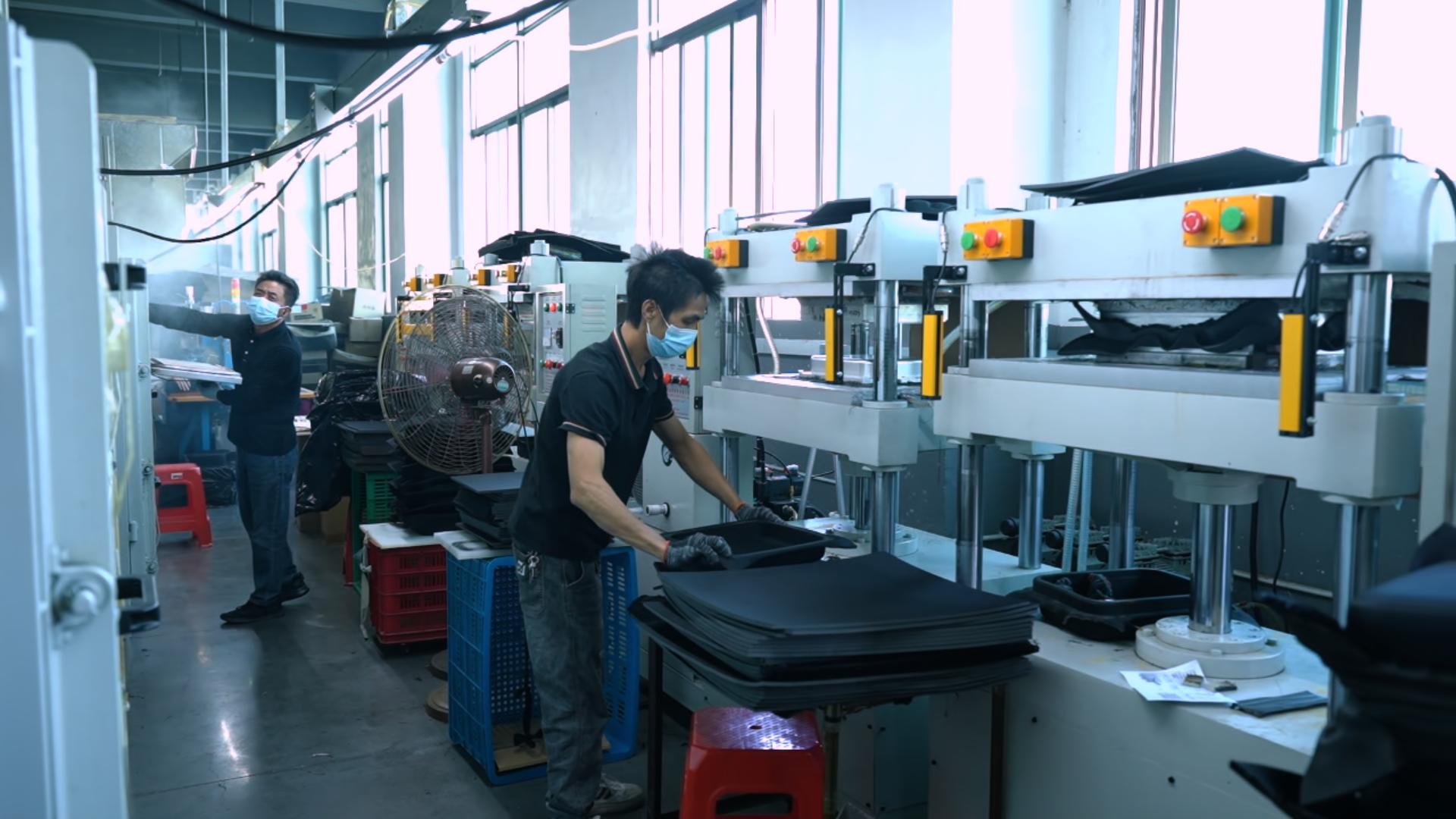
Understanding the detailed manufacturing process of EVA cases is crucial for optimizing your product design, managing costs, and ensuring high-quality output. Our EVA cases feature a layered construction where EVA foam acts as the core protective material, while the outer layers utilize durable fabrics such as Oxford fabric, PU leather, nylon, or other composite textiles to balance protection, style, and function.
This comprehensive guide walks you through the essential manufacturing stages, critical quality factors, and common challenges encountered in EVA case production.
Material Composition of EVA Cases
The core of every EVA case is Ethylene Vinyl Acetate (EVA) foam — a lightweight, flexible, and shock-absorbent material that provides structure and protection. However, the external protective shell is not made solely of EVA foam. Instead, it is typically a laminated composite consisting of:
- Oxford fabric: Renowned for its durability and resistance to abrasion
- PU leather: Delivers a premium look and luxurious texture
- Polyester or nylon: Offers water resistance and excellent toughness
This layered material design enables EVA cases to provide effective protection while maintaining aesthetic appeal and practical functionality.
1. Lamination Process
Lamination bonds the outer fabric and any interior lining to the EVA foam core. Controlling temperature and pressure precisely during lamination is critical to ensure:
- Strong adhesion between layers without wrinkles or bubbles
- Structural rigidity essential for thermoforming
- Consistent surface finish for a premium look
Poor lamination can result in delamination, air pockets, or weak spots, undermining case durability.
2. Thermoforming (Compression Molding)
In the thermoforming stage, laminated sheets are heated to soften the EVA foam core and then compressed into precision-designed aluminum molds, shaping the sheet into the 3D form of the case.
Critical factors influencing thermoforming include:
- Uniform heat distribution across the sheet
- Appropriate pressure and molding time
- High-precision mold design and finish
High-quality thermoforming delivers smooth contours, stable shape retention, and consistent dimensional accuracy — all vital for product fit and protection.
3. Die-Cutting & Sewing
Once thermoformed, excess laminate is trimmed precisely via die-cutting. Then, skilled operators sew zippers, handles, bindings, and internal compartments onto the shaped case.
Key quality considerations during assembly include:
- Consistent, strong stitching to ensure durability
- Precise alignment for clean aesthetics
- Using high-quality threads and sewing techniques to improve wear resistance
These finishing steps directly impact both the functional longevity and visual appeal of the final EVA case.
4. Quality Control & Inspection
Quality checks are integral throughout the manufacturing process. Typical inspections verify:
- Bonding strength and uniform lamination
- Dimensional accuracy and shape consistency after thermoforming
- Stitching quality and accessory installation integrity
- Zipper performance and handle sturdiness
Early detection of defects reduces costly reworks and ensures reliable case performance.
5. Common Manufacturing Challenges
Manufacturers often face difficulties such as:
- Uneven lamination leading to bubbles or wrinkles
- Thermoforming warps or incomplete shaping
- Misaligned sewing reducing the product’s appearance and durability
- Variations in raw materials affecting final feel and performance
Close coordination between design and production teams can help mitigate these risks effectively.
Conclusion and Best Practices
Successful EVA case manufacturing hinges on expertly combining material science, precise thermoforming, and careful assembly. To optimize your EVA case production:
- Clearly specify your desired outer fabric and EVA foam grade
- Prioritize mold design accuracy and perform multiple sample validations
- Focus on manufacturability early to reduce labor intensity and defects
- Implement comprehensive quality control at every stage
Mastering the EVA case manufacturing process enables you to deliver a product that balances aesthetic quality, protection, and cost efficiency.
Frequently Asked Questions (FAQ)
Q1: What materials are used for the outer layer of EVA cases?
A1: The outer layer can be made of various durable fabrics such as Oxford fabric, PU leather, nylon, or polyester, laminated onto the EVA foam core. The choice depends on desired durability, appearance, and price point.
Q2: Is the entire case made of EVA foam?
A2: No, EVA foam forms the protective core, but the outside is typically covered with a fabric layer for enhanced durability and aesthetic appeal.
Q3: What is thermoforming in EVA case production?
A3: Thermoforming involves heating laminated EVA sheets and pressing them into molds to form the case's three-dimensional shape with accurate dimensions and rigidity.
Q4: How important is quality control during manufacturing?
A4: Quality control is essential at every stage—from lamination strength to sewing integrity—to ensure the final EVA case is robust, functional, and visually appealing.
Q5: What are common challenges in EVA case manufacturing?
A5: Challenges include uneven lamination, thermoforming defects, misaligned stitching, and raw material variability. Early design-production collaboration helps reduce these issues.
Q6: Can the EVA case design affect manufacturing costs?
A6: Yes, complex designs or materials requiring difficult processing can increase costs. Designing for manufacturability—simplifying molds, choosing cost-effective materials—helps optimize expenses.