

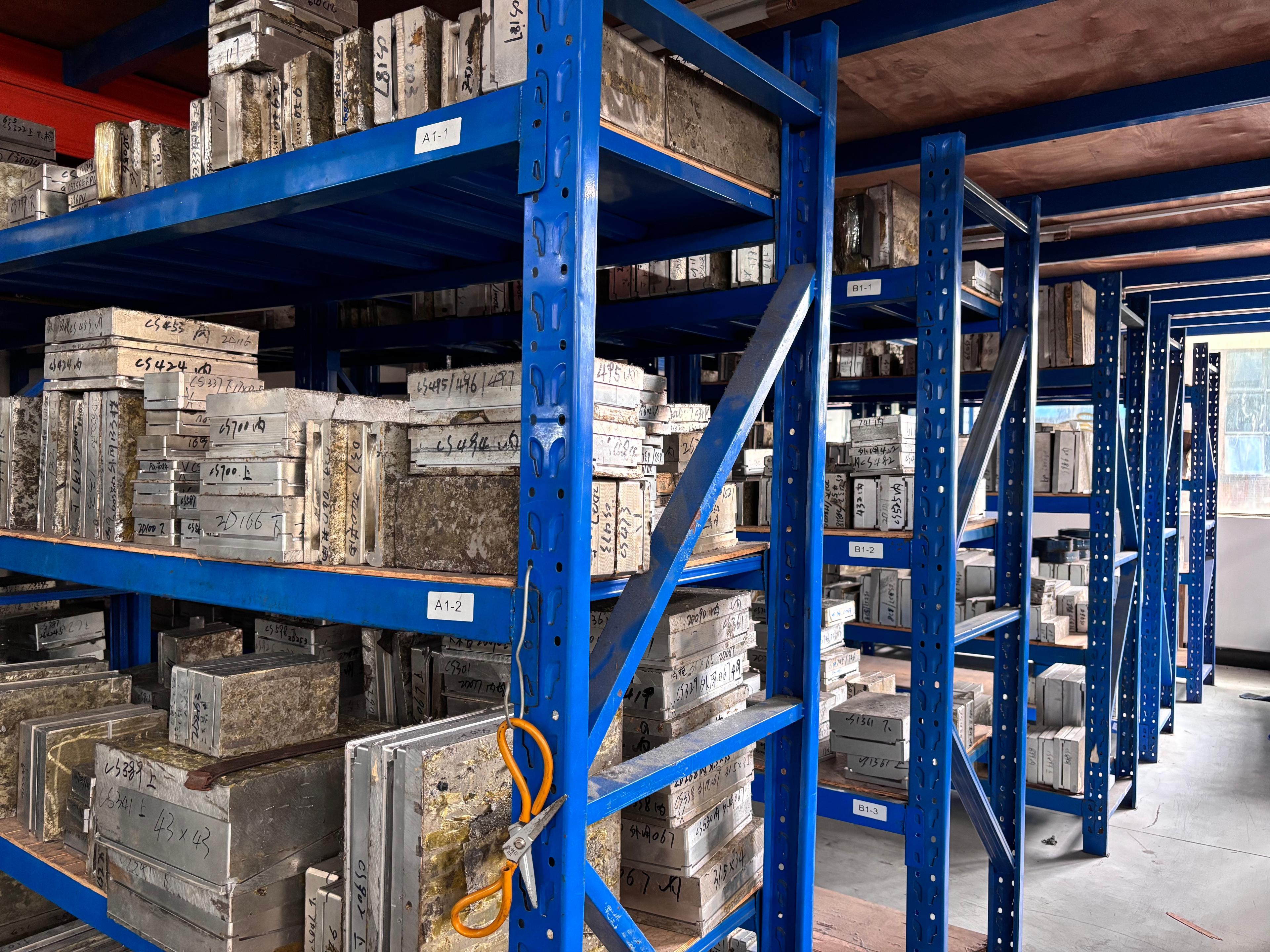
The success of any custom EVA case largely depends on the precision and execution of its mold design. Unlike fully EVA foam cases, our EVA cases utilize a layered structure—an EVA foam core paired with durable outer fabrics like Oxford cloth or PU leather. This composite design requires molds that accommodate both the foam's thermoforming properties and the dimensional stability of the fabric layers.
A well-designed mold ensures dimensional consistency, structural durability, and efficient production cycles. This guide outlines the essential mold design principles and best practices tailored for layered EVA foam protective cases, helping product engineers, manufacturing consultants, and procurement professionals achieve optimal quality and cost control.
H2-1 Fundamentals of EVA Case Mold Design
Mold design for laminated EVA cases involves creating a precise cavity shaped to thermoform the EVA foam core without damaging the outer fabric layers. The mold typically consists of two halves—top and bottom—that compress the laminate under heat and pressure.
Key considerations include:
- Cavity Geometry: Avoid sharp internal corners or excessively deep pockets to prevent EVA foam tearing or fabric distortion.
- Material Thickness Accommodation: Molds must match foam core thickness and fabric layering to maintain uniform shape without overstretching.
- Resistance to High Temperature and Pressure: Mold materials and construction need to endure repeated thermoforming cycles.
H2-2 Engineering Constraints: Draft Angles and Mold Materials
- Draft Angles: Proper draft angles (commonly 3° to 5°) facilitate easy removal of the molded case from the mold without damaging foam or fabric. Deeper cavities or firmer foams might require slight increases, but this must balance with maintaining shape accuracy.
- Mold Material Selection: Aluminum molds are preferred for EVA cases due to their excellent heat conductivity, enabling shorter cycle times and tight temperature control essential for foam and fabric laminates. Steel molds, while more durable, may be overengineered and cost-ineffective for typical EVA case volumes.
H2-3 Cooling System Design for Optimal Mold Performance
Effective and even cooling helps prevent warping and dimensional deviations in EVA cases. Aluminum molds with internal cooling channels close to the cavity walls deliver faster, uniform cooling—key when thermoforming foam laminated with fabric.
Optimizing cooling reduces cycle time, increasing productivity without sacrificing product quality.
H2-4 Tooling Materials & Cost Considerations
The choice of tool materials and design impacts production cost and mold lifespan:
- Aluminum Tooling: Cost-effective for prototyping and small to medium production runs, offering good thermal conductivity with relatively short lead times.
- Steel Inserts: May be integrated into aluminum molds in high-wear zones to extend overall tool life.
- Maintenance: Regular cleaning, deburring, and inspection prevent defects and maintain quality over extended runs.
H2-5 Mold Maintenance & Lifespan Management
Routine maintenance maximizes mold longevity and consistent case production quality:
- Remove adhesive residues or EVA build-up promptly
- Inspect mold surfaces for wear or cracks, especially in high-pressure areas
- Re-coat or replace inserts as necessary
Proactively maintaining molds reduces downtime and costly rework—key to stable EVA case manufacturing.
FAQ
Q1: Why are draft angles important in EVA case mold design?
A1: Draft angles facilitate the smooth release of the thermoformed case from the mold without damaging the foam core or outer fabric, helping maintain case shape and appearance.
Q2: What mold material is best for EVA cases with foam core and fabric?
A2: Aluminum is generally preferred due to its superior heat transfer, enabling accurate thermoforming and faster cycles. Steel molds are less common unless for very high-volume runs requiring extreme durability.
Q3: How does mold design impact EVA case quality?
A3: Precise mold geometry ensures uniform thickness, prevents fabric damage, and achieves consistent shape and dimensional accuracy—a foundation for durable, well-fitting EVA cases.
Q4: What maintenance is needed for EVA case molds?
A4: Regular cleaning, inspection for wear and cracking, and timely replacement of mold inserts maintain production quality and extend mold life.
Q5: Can fabric-covered EVA cases be produced using standard molds?
A5: Mold design must specifically accommodate the dual-layer structure, controlling pressure and temperature to shape EVA foam core without damaging fabric surfaces.