

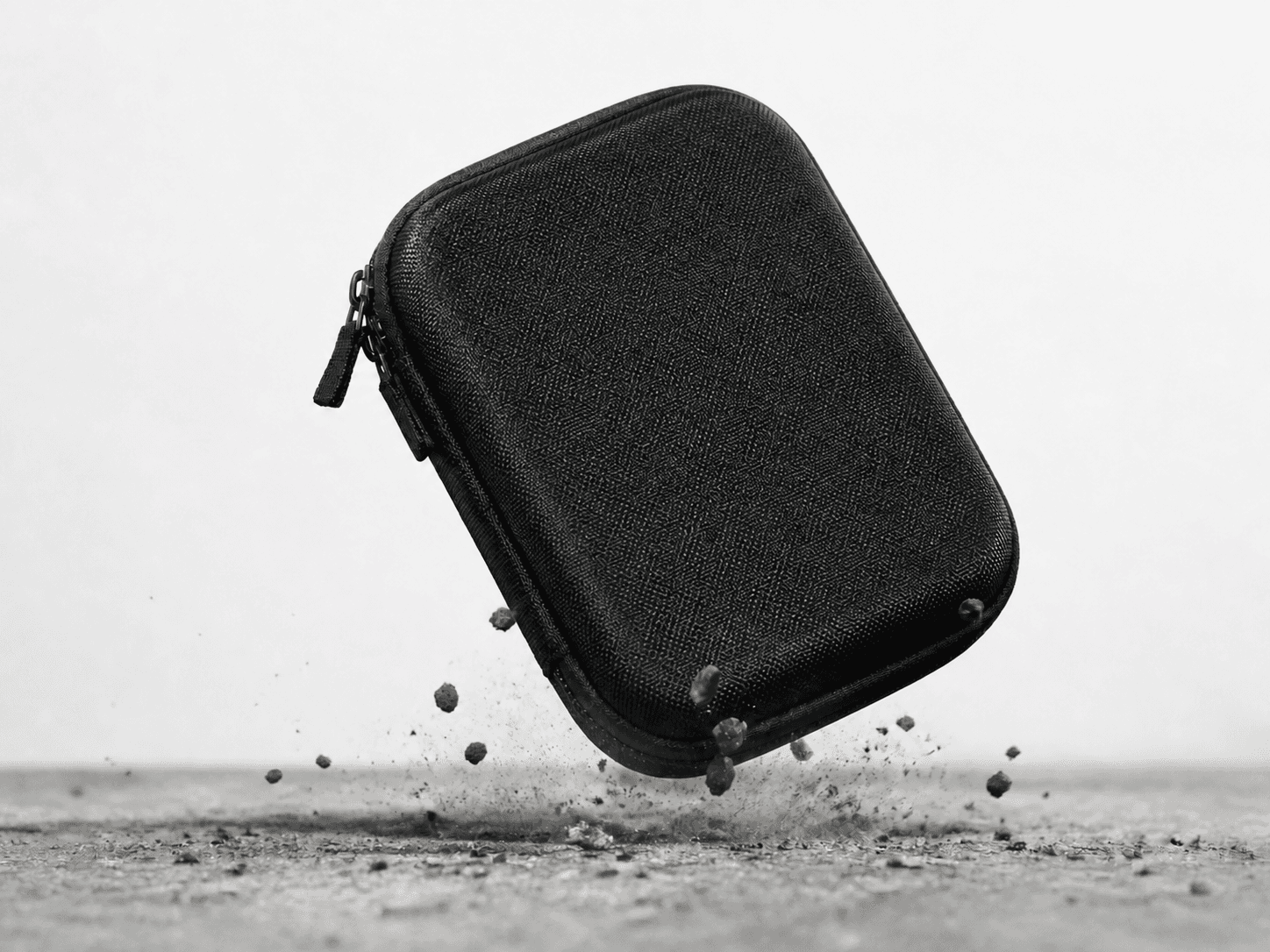
Introduction
For electronics brands, device protection is not optional. Whether a product is shipped to customers, carried in the field, or used in demanding work environments, accidental drops can lead to cracked housings, internal damage, product returns, and costly warranty claims. That is why drop test performance has become an important part of product validation for many electronics and equipment manufacturers.
A well-designed electronics case can make a significant difference in how much impact reaches the device inside. Custom EVA cases are widely used because they combine lightweight construction, excellent cushioning performance, and flexible design options. With the right structure, materials, and prototyping strategy, an EVA protective case can help reduce shock transfer and improve the chances of passing drop tests.
In this guide, we will explain the key principles behind drop test performance and share practical design strategies for creating electronics cases that better resist impact damage.
Why Drop Tests Matter for Electronics Cases
Drop tests are designed to simulate real-world accidents during handling, shipping, and daily use. For electronics products, even a relatively small fall can cause serious problems if the case structure does not provide enough protection.
Common risks include:
- Cracked device housings
- Loose internal components
- Damaged screens or connectors
- Failure of sensitive circuit parts
- Cosmetic defects that affect product quality perception
For manufacturers, passing drop tests is about more than compliance. It is also about protecting the customer experience, reducing support costs, and strengthening brand reputation.
A high-quality protective case helps absorb and distribute impact energy before it reaches the device. This is especially important for sensitive equipment, portable electronics, instruments, and devices that are frequently transported.
What Makes a Good Drop-Resistant Electronics Case
A drop-resistant case is not just about using a hard shell. True protection comes from a combination of material selection, internal cushioning, and structural design.
For custom electronics cases, the most important performance factors are:
- Impact absorption
- Energy dispersion
- Corner and edge protection
- Internal stability
- Controlled deformation under pressure
This is where EVA foam performs especially well. EVA provides a balance of cushioning, flexibility, and shape retention. When used as the core material in a custom molded case, it can help reduce impact transfer while keeping the case lightweight and practical.
In many applications, the outer layer is also important. At our manufacturing level, the case exterior can be made with materials such as Oxford fabric, PU leather, or other durable coverings, depending on the product positioning and application scenario. This layered construction improves both appearance and usability while supporting the foam structure inside.
Use EVA Foam for Reliable Shock Absorption
EVA foam is one of the most common materials used in protective case manufacturing because it offers several advantages:
- Lightweight but durable
- Good shock absorption
- Stable shape after molding
- Easy to customize in different densities and thicknesses
- Suitable for thermoforming and laminated structures
To improve drop test performance, the foam core should be designed according to the weight, shape, and fragility of the device.
Key EVA design strategies include:
1. Choose the right foam density
Higher-density EVA provides better support in high-stress areas, while lower-density EVA can be used in less critical zones to reduce overall weight.
2. Adjust foam thickness
Thicker foam in impact zones helps absorb more energy. However, excessive thickness may increase cost and case size, so the design should be balanced.
3. Match the foam to the device shape
A case performs better when the internal cavity closely fits the product. Loose spaces can allow the device to move during impact, reducing protection.
4. Use layered foam construction
In some cases, combining different foam densities in one structure can improve both cushioning and stability.
A good EVA foam design does not just cushion the device — it controls how force is transmitted through the case.
Reinforce Corners and Edges
Corners are the most vulnerable points in any drop scenario. When a case falls, impact energy is often concentrated at the corners and edges first. If these areas are not reinforced, the protection system can fail even if the rest of the case performs well.
To improve corner protection, you can use:
- Thicker EVA inserts in corner zones
- Rounded internal geometry
- Additional buffering layers
- Localized reinforcement in high-impact areas
- More durable outer materials for extra surface protection
A well-designed corner structure helps spread impact forces more evenly, reducing the chance of damage to both the case and the device inside.
This is especially important for electronics that have screens, lenses, precision parts, or delicate internal assemblies.
Optimize the Case Structure for Impact Resistance
Passing drop tests is not only about the material itself. The overall structure of the case plays a major role in performance.
Important structural design points include:
1. Avoid sharp internal corners
Sharp angles can create stress concentration points. Rounded transitions help distribute force more evenly.
2. Control wall thickness
Wall thickness should be greater in impact zones and can be lighter in less stressed areas.
3. Prevent excessive internal movement
If the product moves inside the case, impact forces increase. A precise fit improves protection.
4. Balance rigidity and flexibility
A case that is too soft may not protect enough, while a case that is too rigid may transfer too much shock. The ideal design balances both.
5. Consider the outer layer structure
For your product type, the outer surface can be made of Oxford fabric, PU leather, or similar materials. These materials improve abrasion resistance and product appearance while working with the foam core to create a complete protective solution.
A successful case design manages force instead of simply resisting it.
Test the Case with Real Drop Scenarios
Even a strong design concept must be validated through testing. Prototype testing helps identify weak points early and avoid costly production problems later.
A practical testing process usually includes:
- Top, bottom, side, and corner drop orientations
- Multiple drop heights based on product use
- Repeated testing to identify wear points
- Observation of internal movement and deformation
- Comparison of results before and after design changes
During testing, pay attention to how the case behaves after each impact:
- Does the outer surface crack or deform?
- Does the device shift inside?
- Are the corners still providing enough support?
- Is the foam compressing too much or bouncing back properly?
These results help guide the next round of design optimization.
Improve Protection Through Iteration
Drop test performance rarely becomes perfect on the first attempt. The best results usually come from a cycle of testing, analysis, and refinement.
You can improve the design by adjusting:
- Foam density
- Foam thickness
- Internal cavity fit
- Corner reinforcement
- Outer layer material
- Overall case geometry
For manufacturers, this iterative process is one of the most effective ways to build a reliable custom protective case. A well-optimized EVA case can significantly improve the protection level of electronics during shipping, storage, and daily handling.
Why Custom EVA Cases Are a Strong Choice for Electronics Protection
Custom EVA cases are a strong solution for electronics and equipment brands because they offer a practical combination of protection, appearance, and manufacturing flexibility.
They are especially suitable for:
- Consumer electronics
- Portable devices
- Test instruments
- Industrial equipment
- Medical devices
- Outdoor and field-use products
- Charging accessories and kits
Compared with generic packaging or unstructured bags, a custom EVA case provides:
- Better impact resistance
- Better product positioning
- Better internal organization
- Better user experience
- Stronger brand perception
For businesses that care about both product safety and presentation, this makes EVA cases a highly effective choice.
Final Thoughts
Passing drop tests for electronics cases requires more than just selecting a cushioning material. It depends on a complete design strategy that combines EVA foam performance, structural optimization, corner reinforcement, and real-world testing.
For custom case manufacturers, the goal is to create a solution that protects the device without adding unnecessary weight, cost, or bulk. With the right engineering approach, custom EVA cases can provide reliable shock absorption and help electronics survive accidental drops more effectively.
If you are developing a protective case for electronics or sensitive equipment, a layered EVA structure with durable outer materials such as Oxford fabric or PU leather can be an excellent starting point for both protection and presentation.
FAQ
Q1: What is the best material for a drop-resistant electronics case?
EVA foam is one of the best materials for shock absorption because it is lightweight, durable, and easy to mold into custom protective structures. For better performance, it is often used with outer materials such as Oxford fabric or PU leather.
Q2: How can I improve corner protection in a case?
Corner protection can be improved by using thicker EVA inserts, rounded geometry, and additional buffering layers in high-impact zones.
Q3: Do custom EVA cases help with drop tests?
Yes. Custom EVA cases can reduce impact transfer, limit internal movement, and improve overall shock absorption, which helps devices perform better in drop test scenarios.
Q4: Should the outer layer affect drop performance?
Yes. The outer layer contributes to durability, abrasion resistance, and overall structural support. In your case structure, materials like Oxford fabric or PU leather can work together with the EVA foam core.
Q5: Is one foam thickness enough for all electronics cases?
No. Foam thickness should be based on the device weight, fragility, shape, and intended use. Different zones may require different thicknesses or densities.